The beauty industry never slows down — but not every trend deserves a seat at the table.
As we head into 2026, the brands standing out aren’t the ones chasing every viral moment. They’re the ones making thoughtful decisions about what aligns with their identity, audience, and long-term vision. From product development to packaging and campaigns, the shift is clear: intention matters more than noise.
Here are the beauty trends shaping 2026 that brands should actually be paying attention to.
1 — Skin-First Beauty Is the Standard, Not the Trend
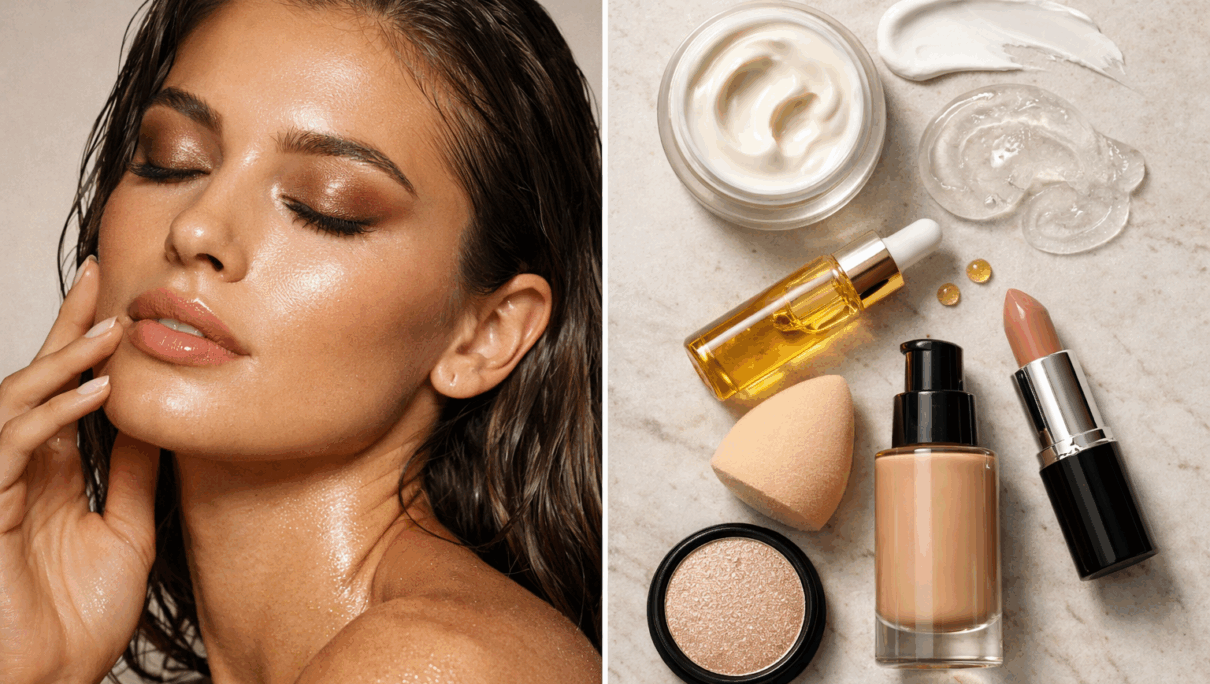
What started as “skinimalism” has evolved into something more refined. Consumers now expect makeup, skincare, and even fragrance-adjacent products to feel purposeful — hybrid formulas, treatment benefits, and sensory experiences that go beyond claims.
This doesn’t mean every brand needs to be clinical. It means function and feeling must coexist. The most successful brands are building trust by clearly communicating why a product exists and how it fits into someone’s routine.
Forecasting platforms like WGSN continue to highlight longevity and performance as key drivers, especially as consumers become more educated — and more selective.
2 — Packaging Is Doing More Than Ever Before
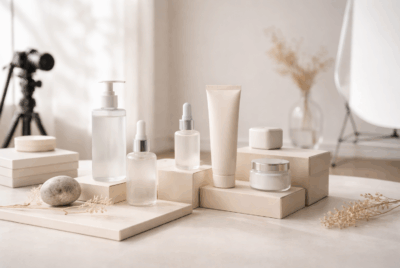
In 2026, packaging isn’t just about aesthetics — it’s about storytelling, usability, and perception.
We’re seeing a move toward:
Elevated minimalism with tactile finishes
Refillable or modular systems that feel considered, not gimmicky
Packaging that communicates price point instantly
The brands winning shelf space understand that packaging is the first touchpoint. Before a product is tried, reviewed, or recommended, it’s seen — and that moment matters.
Publications like Glossy have consistently emphasized how design-forward packaging influences both discovery and retention, especially in crowded categories.
3 — Campaign Imagery Is Going Wide (and Working Harder)
Beauty visuals in 2026 are being built with flexibility in mind. Campaigns are no longer designed for a single platform — they need to live across websites, paid media, retail, press, and social without losing impact.
That means:
Strong hero imagery with negative space
Editorial-level styling paired with commercial clarity
Visual systems that feel cohesive, not one-off
Magazines like Vogue Beauty continue to spotlight brands that understand restraint — proving that sometimes the most powerful campaigns are the most considered.
4 — Color Is Strategic, Not Decorative
Color trends still matter, but how they’re used matters more.
Rather than fully rebranding around “color of the year” moments, brands are integrating trending tones as accents, seasonal updates, or campaign layers. This approach keeps visual identities intact while still feeling current.
Color is being used to:
Signal mood and emotion
Differentiate product lines
Create consistency across packaging and content
The smartest brands are treating color as a system, not a shortcut.
5 — Storytelling Is More Refined AND More Honest
Consumers are moving away from buzzwords and toward brands that feel clear and grounded. In 2026, storytelling is less about overexplaining and more about showing alignment — between product, visuals, values, and experience.
This shows up in:
Cleaner copy
Thoughtful brand worlds
Campaigns that feel lived-in, not staged
When everything connects, brands don’t need to shout. The work speaks.
Looking Ahead
The beauty brands shaping 2026 aren’t chasing trends — they’re curating them. They understand that strong ideas, paired with the right execution and people, create longevity.